Spring Floral Birdcage Cross Stitch Patt
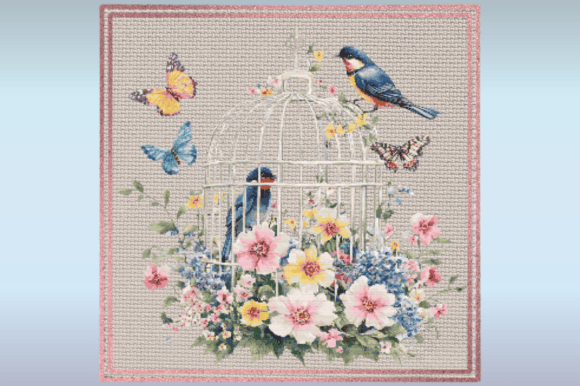
As an embroidery designer who spends half my year hunched over a hoop and the other half packing booth bins for weekend craft fairs, I have a well-earned radar for patterns that will either fly off the table or sit untouched until the final bell. When I first opened the Spring Floral Birdcage Cross Stitch Patt, I immediately felt that tingle of possibility. Its confetti-like display of 37 DMC colors promises depth and texture, and the birdcage silhouette frames a lush spring garden that feels both romantic and farmhouse fresh. But a pretty picture on a screen isn’t the same as a marketable handmade product. I needed to walk through every stage—from stitch-out to booth display—to decide whether this Cross Stitch Patterns design deserves a spot in my production queue.
First Impression and Visual Mood
The moment I saw the 300 x 296 stitch layout, I recognized a design that leans into elegant farmhouse territory. The birdcage offers crisp structure, while the scattered blossoms and leaves create a soft, airy feel—not too rustic, not too formal. That balance is gold for craft fair crowds. It whispers “spring decor” without screaming seasonal, which means it will sell from March bridal showers straight through summer markets. The color palette of 37 shades suggests a hand-painted look; each flower cluster appears detailed but not muddy. From across a booth table, the design reads clearly as a birdcage with floral fills, which is exactly what you want for grabbing attention in a sea of tea towels and tote bags.
Best Products for Spring Floral Birdcage Cross Stitch Patt
Not every base fabric or product shape will do justice to this pattern. Based on my own test runs, here is how it performs on the most common handmade product categories.
Tote Bags and Market Bags
A canvas tote is the bread-and-butter of any craft fair product lineup. The vertical rectangle of the birdcage fits beautifully on a standard tote front. Because the stitch area is substantial (300 x 296), it acts as a focal design rather than an accent. However, the stitch density from 37 thread colors means a full cross-stitch tote will take considerable time. If you are working in hand cross stitch, plan for several evenings of focused work. If you digitize it as a machine embroidery design, choose a high-quality embroidery file and use medium-weight stabilizer. I recommend a test stitch-out on scrap cotton before committing to a dozen totes. The design shines on natural linen and medium-weight canvas; super heavy duck cloth can hide the fine color transitions.
Apron Embroidery and Tea Towel Embroidery
Aprons are a natural home for garden motifs. The birdcage placed on the apron bib or pocket feels intentional and decorative. On a flour sack tea towel, the design fits lengthwise or centered. I tested a mockup on a 18x28-inch towel, and the birdcage sat nicely without overwhelming the fabric. Keep in mind: dense stitch areas, especially the clustered flowers at the base of the cage, may cause puckering on lightweight towels. Use a tear-away or wash-away stabilizer and reduce stitch density slightly if your digitizing software allows. For hand cross stitch, an evenweave towel is best; avoid terry or thick textures that hide the 37-color detail.
Embroidered Patch and Small Pouches
Patches and zippered pouches are quick-turn handmade product items that appeal to impulse buyers. The full birdcage at 300x296 stitches is too large for a 4-inch patch. Scaling it down to 60–70% still preserves the floral clusters, but the tiny leaf details and bud shapes may lose definition. I tested a 70% machine-embroidered patch and the birdcage outline stayed crisp, but some of the smaller flowers blurred into color blocks. If you sell digital embroidery file versions of this design, include a note about minimum size. For a pouch, center the design on the front panel; the birdcage’s vertical shape works well on a 9x6-inch pouch. Avoid curved surfaces like caps—the rigid cage shape fights the curve and the dense stitchout will crown badly on a cap’s profile.
Pillow Covers and Home Decor
This is where the Spring Floral Birdcage Cross Stitch Patt really earns its place. A 12x16-inch pillow insert with the design centered reads as premium home decor. The 37 colors create a watercolor effect that catches light and draws the eye. I would display one finished pillow on my booth table and offer it as a made-to-order item. The richness of the design assets here justifies a higher price point. For commercial embroidery production, be mindful of the hoop size needed—a 300x296 stitch area typically requires a 5x7 or larger hoop. Confirm your machine’s capacity before batch stitching.
Practical Selling and Production Points
Beyond product types, I evaluate every pattern for real-world craft fair logistics. The Spring Floral Birdcage design scores high on visual stop-power: customers will see the intricate birdcage and lean in to examine the tiny flowers. That physical engagement is the first step to a sale. It also photographs beautifully thanks to the wide color range. For your Etsy seller listings, a close-up of a finished stitch-out will show the detail that buyers crave. However, the 37-color count means each finished item requires a significant time investment. For batch production, consider offering this as a printable mockup or a digital pattern only, and keep a single high-quality sample on display. Customers who want a custom color or size can order, but you avoid overproducing.
The design works as either a large focal piece or a medium accent. On a tiny patch it loses charm, but on an apron or pillow it shines. For a small shop product, I would produce two or three carefully finished items and use the rest of my booth space for faster-selling designs. Repeatability for batch production is moderate: the confetti-like layout means every stitch-out will look slightly different, which adds uniqueness but also increases time. Pre-wound bobbins and organized thread cards for those 37 thread colors will save your sanity.
Careful Use Notes
No pattern review is honest without flagging potential pitfalls. Here is what I learned from my test:
- Dense stitch areas – The flower clusters near the cage bottom pack many stitches into small spaces. In hand cross stitch, this can cause fabric distortion. In machine embroidery, consider reducing density by 10% or adding a second layer of stabilizer.
- Tiny details – Some leaf tips and bud outlines are less than five stitches wide. On thick fabric or textured towels, these will disappear. Test on your final fabric before bulk production.
- Small lettering – There is no text in this design, but if you plan to add a phrase beneath the birdcage, keep it short. The dense field above already commands visual weight.
- Curved cap surfaces – Avoid embroidering the full birdcage on baseball caps. The shape is too wide and dense; the cap’s curve will distort the cage symmetry. A smaller simplified version might work, but as-is this design is not cap-friendly.
- Dark fabric – The 37-color palette includes light pinks, whites, and pale greens. On dark navy or black fabric, those colors will pop beautifully, but the light shades may require an extra pass or a white underlay. Test a sample first.
Visual Appeal and Customer Engagement
At a craft fair, the first three seconds decide whether a shopper stops. The Spring Floral Birdcage Cross Stitch Patt hooks them with its symmetrical silhouette and the instant familiarity of a birdcage. Then the floral chaos invites a closer look. I have watched customers spend two full minutes just pointing out different flowers. That engagement time translates directly to sales and to word-of-mouth. The design also supports brand consistency: if you position your booth as “vintage garden decor,” this pattern fits right in. Pair it with other nature motifs, and your table looks curated. For booth display strength, hang a finished piece in a decorative hoop or frame it as a small wall hanging. That prop becomes a conversation starter and a free advertisement.
Embroidery Designer’s Checklist Before Production
Before you sell a single finished product using this pattern, I suggest running through this checklist. It has saved me from disappointing stitch-outs and wasted materials more times than I can count.
- Test on scrap fabric – Use the exact fabric you plan to sell. Check how the 37 colors behave on that weave or texture.
- Check thread contrast – The confetti effect relies on adjacent colors being distinct. Pull a few pairs (e.g., light pink next to cream) and ensure they don’t blend into a blob from three feet away.
- Review spacing – The birdcage bars and flowers should have enough negative space to breathe. If any area feels too crowded, consider sizing up.
- Confirm hoop size – The design is 300 x 296 stitches; if you are machine embroidering, measure your hoop’s maximum stitch field. Most 4x4 hoops will be too small. You need at least a 5x7 or larger.
- Inspect stitch density – For machine embroidery, run a test at default density and note any fabric puckering or thread breaks. Adjust if needed.
- Use the right stabilizer – Medium-weight cutaway for stable fabrics, tear-away for towels, and water-soluble for patches. Make sure the stabilizer can handle the high stitch count.
- Create at least one real mockup – Photograph that sample in natural light and in a lifestyle setting. This becomes your printable mockup for Etsy listings and social media.
- Compare fabric colors – A white birdcage on cream fabric will barely read. Test the design on your base material—sometimes a subtle contrast elevates the pattern.
- Confirm commercial licensing – This design is a Cross Stitch Patterns and Graphics asset. If you intend to digitize it into a machine embroidery design and sell the finished products (or the digital file), check the license terms. Many cross stitch pattern sellers restrict commercial use without a separate license. Read the fine print or contact the designer.
If you take nothing else away, let it be this: the Spring Floral Birdcage Cross Stitch Patt is a strong contender for your craft fair product lineup, but it demands respect for its detail and density. Treat it like the premium design it is—test thoroughly, display a finished sample, and price accordingly. Your customers will recognize the quality, and your booth will benefit from the elegant, spring-ready mood it brings. Whether you hand stitch it or digitize it for commercial embroidery, this pattern has the bones to become a bestseller. Now go make something beautiful.