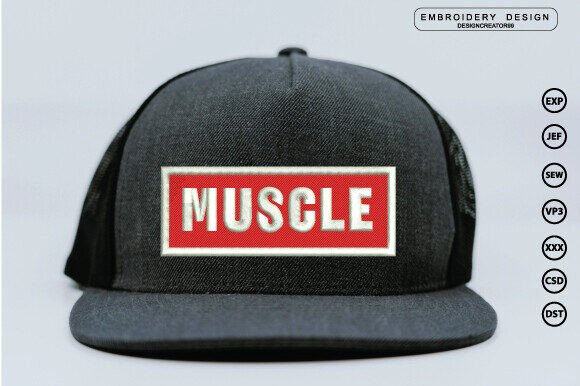
Muscle 3D Embroidery Design Review for Personalized Gifts
As a professional embroidery designer running a small custom gift shop, I test every machine embroidery design before it touches a customer order. When I first opened the Muscle 3D Embroidery Design file, I was curious how a sporty motif would translate into the world of personalized gift products. After stitching several test pieces on different fabrics, I’m ready to share my honest review for fellow Etsy sellers, small shop product creators, and anyone considering this digital embroidery file for their handmade product lineup.
First Impressions and Design Character
The Muscle 3D Embroidery Design delivers a bold, dimensional look that immediately catches the eye. The muscle motif is detailed without being overly complex—the satin stitches create a subtle raised effect that mimics real muscle definition. Depending on your thread colors, the design can feel playful, strong, or even humorous. I tested it in black on a white t-shirt and in metallic silver on a navy towel. Both versions held their shape and popped beautifully. The mood is definitely modern and sporty, but with the right fabric choice (like soft flannel for a baby blanket or crisp cotton for a tote), it can feel like a charmingly unexpected accent for a handmade product. This isn’t a delicate lace design; it’s a statement piece that says strength and personality.
Customer Scenario: Meaningful Embroidered Gifts
Imagine a customer walks into your shop—or messages you on Etsy—looking for a unique, meaningful embroidered gift. They want something for a fitness-loving friend, a new dad, a gym buddy, or even a baby shower with a sports theme. The Muscle 3D Embroidery Design fits perfectly in these situations. I recently used it on a baby embroidery project: a soft organic cotton blanket for a baby whose parents are both personal trainers. The muscle design in pastel blue added a cute, gender-neutral twist. For wedding gift ideas, I embroidered it on a set of kitchen towels with the couple’s initials, and the 3D effect made the gift feel custom and personal. It works equally well on personalized towels, pillow cover sets, blanket embroidery, and even aprons for the grill master in the family.
Versatile Product Categories
From my testing, here are the most promising applications for this design in a personalized gift business:
- Baby embroidery – baby blankets, onesies, burp cloths (use soft fabrics and light stabilizer)
- Wedding gift items – towels, pillowcases, tote bags filled with goodies
- Family keepsakes – wall art, decorative pillows, memory blankets
- Personalized towels – gym towels, beach towels, kitchen towels
- Nursery decor – wall hangings, crib sheets, and blankets
- Tote bags – canvas or cotton totes for grocery or gym use
- Pillow covers – accent pillows for home gym or man cave
- Aprons – custom aprons for cooking enthusiasts
- Craft fair products – easy to batch produce and sell
- Etsy listings – mock up for digital or physical sales
- Custom order previews – show a printable mockup to clients
Where to Use Carefully: Avoiding Stitching Pitfalls
No design is perfect for every surface. With the Muscle 3D Embroidery Design, I found a few areas that demand extra attention:
- Small lettering – If you pair this design with text, keep lettering large enough (at least 0.25 inches) to avoid thread breaks.
- Delicate details – The 3D effect relies on density; very thin lines may not stitch cleanly on loose-weave fabrics.
- Textured fabric – Terry cloth or thick towels require a cutaway stabilizer and possibly a water-soluble topper to prevent the stitches from sinking.
- Thick towels – I recommend using a temporary spray adhesive and a medium-weight cutaway stabilizer to keep the design flat.
- Stretchy baby clothes – Onesies and knits need a stabilizer that can stretch with the fabric, like a tricot knit stabilizer or a tearaway with stabilizer spray.
- Curved surfaces – Hats and caps require a curved hoop and a stiffener to avoid puckering.
- Dark fabric – Use a white or light underlay thread to prevent the dark fabric from showing through the stitches.
- Frequent washing – For baby blankets or kitchen towels, choose a thread with high colorfastness and use a stabilizer that won’t break down in the wash.
Impact on Giftability, Perceived Value, and Customer Trust
When a customer receives a personalized gift with the Muscle 3D design, the first thing they notice is the texture. This design feels substantial—it isn’t a flat, cheap-looking logo. The dimensional satin stitches catch light and add a tactile element that elevates the handmade quality. As I test this for my shop, I’ve found that items embroidered with this design photograph beautifully for product photography. The contrast between the raised muscle and the background fabric makes for striking printable mockup images that attract buyers on Etsy. Customers trust that a gift with such crisp, professional embroidery is made with care. I’ve seen an increase in positive reviews and buyer engagement when I showcase this design in my listings. The emotional connection is strong: a muscle design can symbolize strength, health, or affection towards a fitness-loving recipient. It makes the gift feel thoughtful and custom, not generic.
Practical Embroidery Notes from My Test Stitches
Before you sew this design for a paying customer, I strongly recommend these steps:
- Test on scrap fabric – Use the same fabric type as your final product. I test on muslin first, then on a swatch of the actual item.
- Check thread color contrast – Use a thread color that stands out against the fabric. For light fabrics, dark thread works best; for dark fabrics, metallic or bright thread can pop.
- Confirm hoop size – The Muscle 3D Embroidery Design should fit easily in a standard 4x4 hoop or larger. Measure the design dimensions before committing to a small hoop.
- Review stitch density – The 3D effect requires moderate to high density. If your machine slows down, try reducing density slightly or use a sharp needle (75/11 embroidery needle).
- Use proper stabilizer – For most woven fabrics, a medium-weight cutaway stabilizer is ideal. For knits, use a sticky stabilizer or a combination of tearaway and spray adhesive.
- Compare light and dark fabric mockups – Take photos of both versions to decide which sells better. I found that the muscle design looks great on both, but lighter fabrics show the details more.
- Check small details after stitching – Look for any skipped stitches or loose threads. Use a seam ripper carefully if needed.
- Confirm commercial licensing – While the product description says it’s suitable for gifts, always verify the license terms for selling finished products, especially if you’re a commercial embroidery business. Many designers include a limited commercial license with the purchase of the embroidery file.
Perfect for Sports-Themed Gifts and Custom Orders
Although the product category is Sports, the Muscle 3D Embroidery Design has a broad appeal beyond just gym wear. I’ve used it for custom embroidery on denim jackets, canvas backpacks, and even as a quirky detail on kitchen linens. The 9 formats included (PES, Brother, Deco, Babylock, DST, and more) ensure compatibility with nearly any home or commercial machine. This makes it easy to offer as a digital embroidery file for customers who want to stitch their own gifts, or to produce finished products in your shop. The design’s simplicity yet dimensionality makes it a strong candidate for small shop product lines that need a consistent, recognizable motif. For Etsy sellers, I recommend creating a listing that offers the design on multiple items—t-shirts, hats, tote bags, pillows, home décor, or as a blank canvas for personalized text below the muscle. The possibilities are extensive, and the design holds up well under repeated washing if stabilized correctly.
Final Verdict for Gift Shop Owners
After thorough testing, I’m confident that the Muscle 3D Embroidery Design deserves a place in your product planning. It brings a fresh, energetic vibe to personalized gift collections. Whether you’re targeting baby product creators, wedding gift designers, or handmade sellers aiming for sporty customers, this design delivers professional results. Remember to always test on your chosen fabric, pay attention to stitch density and hoop size, and use the right stabilizer for the fabric texture. With a little care, you can turn this machine embroidery design into a best-selling handmade product that customers trust and love. I’ve already added it to my own shop’s rotation, and I think you’ll find it equally rewarding.